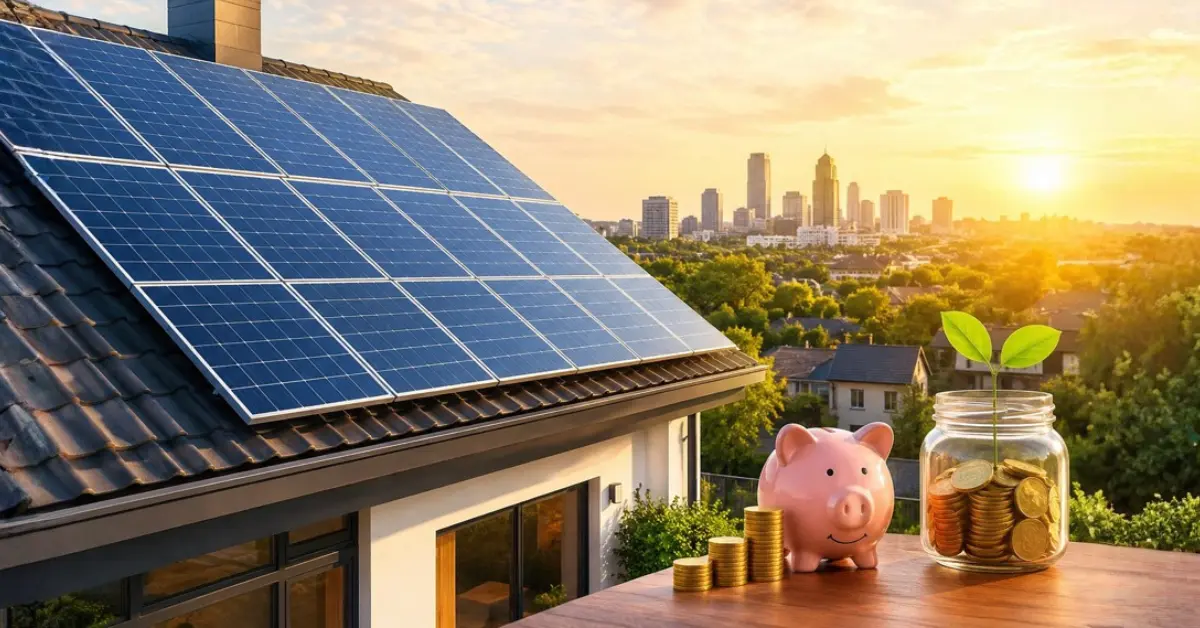
Have you ever looked at your monthly electricity bill and wondered if there is a long-term way to reduce your power costs? As electricity tariffs continue to rise across urban and rural areas, many households are paying more every year. Solar power offers an alternative by generating electricity directly from your rooftop. While the upfront installation cost may seem high, comparing the initial investment with the long-term savings can help you decide whether installing solar panels is a worthwhile financial decision.
What Is the Actual Solar Panel Installation Cost for Homes?
The total solar panel installation cost for a residential setup ranges from ₹55,000 to ₹85,000 per kilowatt before government subsidies. A turnkey installation includes solar PV modules, string or hybrid inverters, mounting structures, cabling, electrical safety gear, labour and utility grid connectivity. High-efficiency N-Type TOPCon panels produced by leading solar panel manufacturers like Avaada Electro deliver superior energy yields per square meter, optimising rooftop space and driving down balance-of-system expenses.
System costs vary based on capacity, component quality and site conditions:
- Solar Modules: Accounts for 45% to 50% of the overall cost, depending on cell technology like Monocrystalline PERC or N-Type TOPCon.
- Inverters and Controls: Represents 15% to 20% of the outlay, converting direct current into alternating current for home appliances.
- Mounting Hardware and Cables: Makes up 15% to 20% of expenditure, securing panels against high winds and facilitating safe electrical transfer.
- Labour and Net Metering: Accounts for 10% to 15%, covering engineering design, physical assembly and local DISCOM approvals.
The standard solar system for home price after factoring in central incentives displays clear economies of scale across capacities:
| System Capacity | Total Cost (Before Subsidy) | PM Surya Ghar Subsidy | Net Out-of-Pocket Cost | Daily Energy Generation |
| 1 kW | ₹55,000 – ₹75,000 | ₹30,000 | ₹25,000 – ₹45,000 | 4 – 5 units |
| 2 kW | ₹1,10,000 – ₹1,50,000 | ₹60,000 | ₹50,000 – ₹90,000 | 8 – 10 units |
| 3 kW | ₹1,65,000 – ₹2,25,000 | ₹78,000 | ₹87,000 – ₹1,47,000 | 12 – 15 units |
| 5 kW | ₹2,75,000 – ₹3,75,000 | ₹78,000 | ₹1,97,000 – ₹2,97,000 | 20 – 25 units |
How Much Can You Save Long-Term by Switching to Solar Power?
Residential rooftop solar systems can recover their installation cost in around 3 to 5 years. After that, they continue generating electricity for the rest of their 25-year lifespan, helping reduce dependence on grid power. Since grid electricity typically costs around ₹7 to ₹8 per unit, generating electricity at home can lower monthly electricity bills.
Over time, these savings add up:
- Monthly Savings: A 3 kW rooftop solar system can generate around 360 to 450 units of electricity every month. This can reduce electricity bills by approximately ₹2,500 to ₹3,500, depending on consumption and local tariffs.
- Annual Savings: Homeowners may save around ₹30,000 to ₹42,000 each year while also reducing the impact of future electricity tariff increases.
- Long-Term Returns: Over a 25-year operating life, total electricity bill savings can exceed ₹7 lakh to ₹8.5 lakh, even after accounting for an initial net investment of around ₹1 lakh.
- Low Maintenance: Solar PV systems have no moving parts. Periodic cleaning with water or suitable dry-cleaning methods is generally enough to maintain their performance.
How Government Subsidies and Incentives Lower Your Initial Outlay
Government support under the PM Surya Ghar Muft Bijli Yojana helps reduce the cost of installing rooftop solar systems for eligible households. Depending on the system capacity, the central subsidy can cover around 40% to 50% of the installation cost. Once the solar system is installed, verified and connected through net metering, the subsidy amount is transferred directly to the bank account of the beneficiary.
The scheme offers the following financial benefits:
- Subsidy for 1 kW to 2 kW systems: A subsidy of ₹30,000 per kW is available, allowing eligible households to receive up to ₹60,000 for a 2 kW system.
- Subsidy for 3 kW and above: An additional ₹18,000 is provided for the third kilowatt, taking the maximum central subsidy to ₹78,000 for residential installations.
- Concessional solar loans: Many nationalized banks offer collateral-free solar loans at interest rates of around 7% per annum, making installation costs easier to manage.
- Net metering benefits: Any excess electricity generated can be exported to the local power grid. The credited units are adjusted against future electricity bills, helping reduce monthly power expenses.
Final Thoughts
Comparing the initial installation cost with the long-term savings shows why rooftop solar is considered a practical investment for many households. With lower installation costs, shorter payback periods of around four years in many cases and central government subsidies reducing the upfront expense for eligible homeowners, solar systems can help lower electricity bills over time. The savings generated throughout the lifespan of the solar system can offset the initial investment while providing a reliable source of clean energy. Choosing quality solar panels and the right system size can improve energy generation and overall value. Along with reducing dependence on grid electricity, rooftop solar also supports the wider adoption of renewable energy and contributes to a more sustainable energy future.