

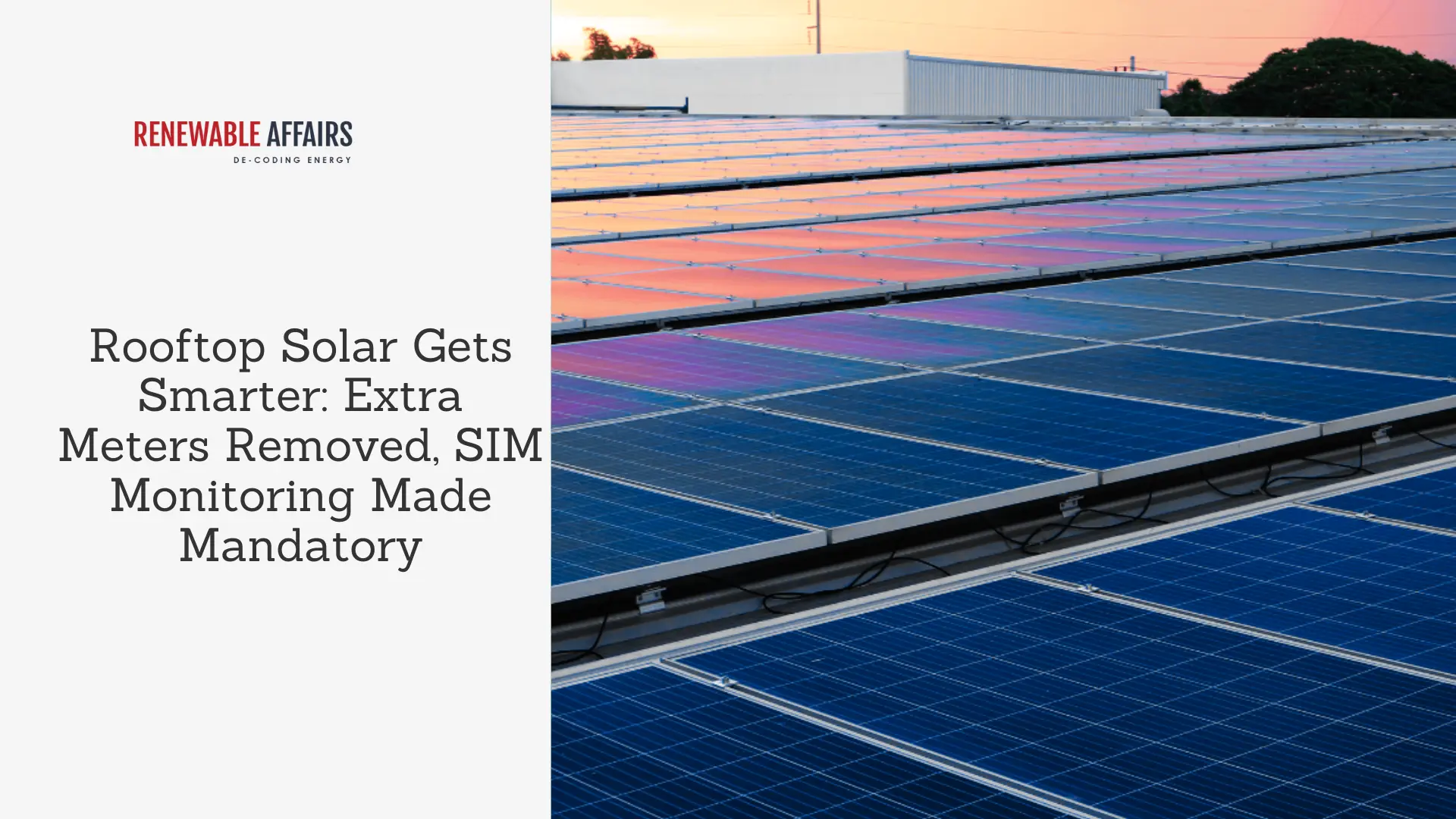
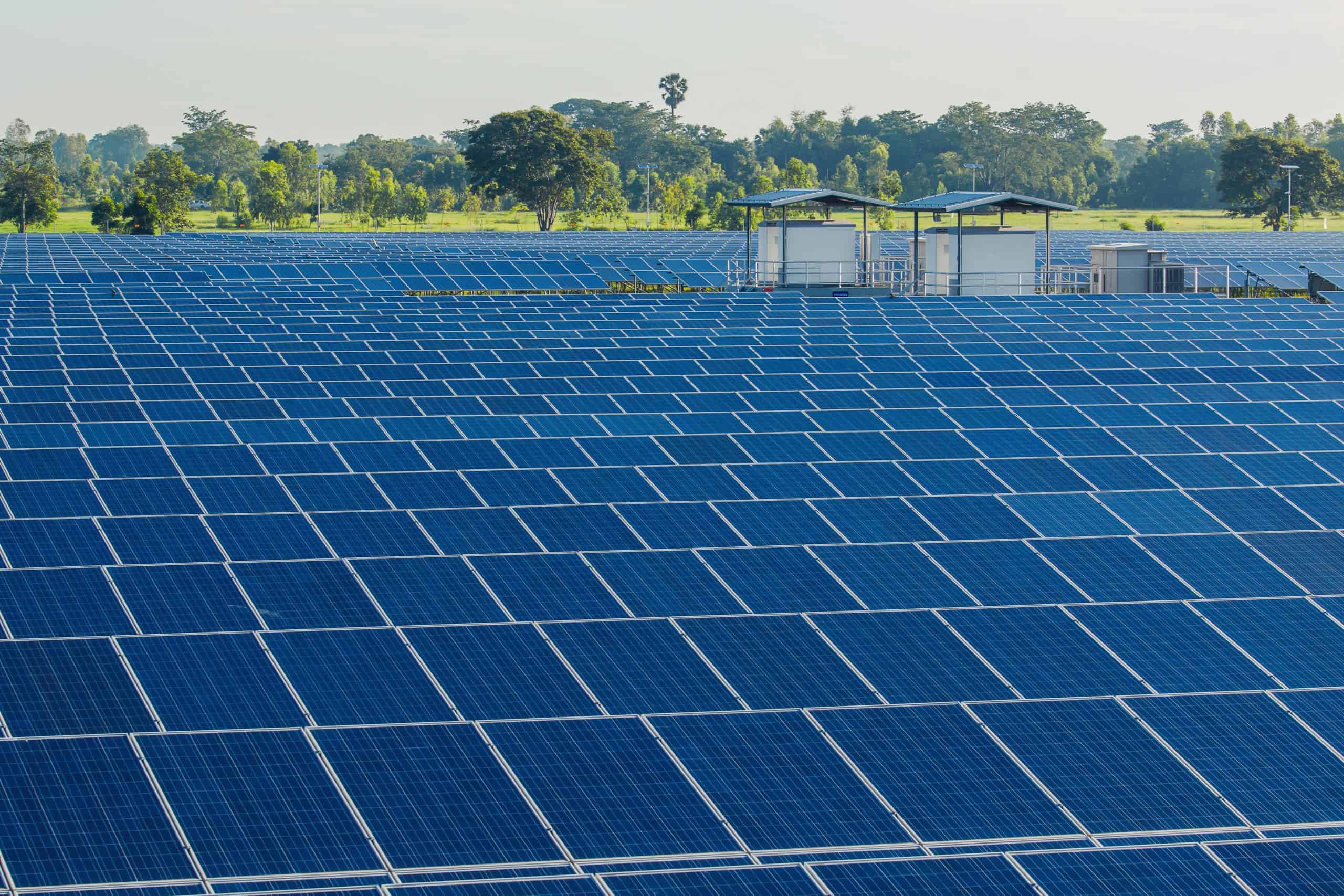
The solar energy industry in Nagpur has raised concerns about new restrictions on rooftop solar approvals in Maharashtra. Industry representatives say the change could mainly affect small households and slow down the growth of rooftop solar installations.
The All India Renewable Energy Association (AIREA) has written to the Ministry of New and Renewable Energy (MNRE), asking for urgent action. The association claims that Maharashtra State Electricity Distribution Company Limited (MSEDCL) has quietly changed the way rooftop solar capacity approvals are given.

Earlier, households could install solar systems based on their sanctioned electricity load, which also allowed them to plan for future needs. Now, approvals are reportedly being limited to the average electricity consumption of the last 12 months. According to AIREA, this change was introduced without any official announcement or discussion with industry stakeholders.
The association says this new approach is already affecting about 50–60% of booked residential solar projects in Maharashtra.
The decision may particularly impact middle-class families who plan to increase their electricity usage in the future by buying electric vehicles, air conditioners, or other appliances. Many households that previously kept electricity use low because of high tariffs may now be unable to install larger solar systems for future needs.
AIREA director Saket Suri said MSEDCL’s approval system is not allowing consumers to install rooftop solar up to their sanctioned load. Instead, it only considers past electricity usage. He added that this could affect residential, commercial, and industrial consumers.
Newly built homes are also facing problems. Since they have little or no electricity-usage history, they are being approved for very small solar capacities, even if they have enough rooftop space and sanctioned load for larger systems. Industry experts warn this could discourage rooftop solar adoption.
Solar and power expert Sudhir Budhay said the rule contradicts existing regulations. Electricity bills are calculated based on sanctioned load, but solar approvals are now based on past consumption. He said this goes against net-metering principles and the Electricity Act, which allows consumers to generate electricity for their own use.
Another concern is that energy-efficient households may be penalized, because lower electricity usage could result in smaller solar approvals. The association also mentioned reports that multiple solar systems on the same rooftop are being discouraged, which could affect joint families with separate meters.
AIREA has asked both MNRE and the Maharashtra Electricity Regulatory Commission (MERC) to step in. The group says these restrictions could slow rooftop solar adoption, affect solar vendors’ businesses, and increase dependence on grid electricity for households and small consumers.
Officials from MSEDCL have said they will review the concerns raised by the industry.
Source










































































































































































































































































































































































0 Comments