
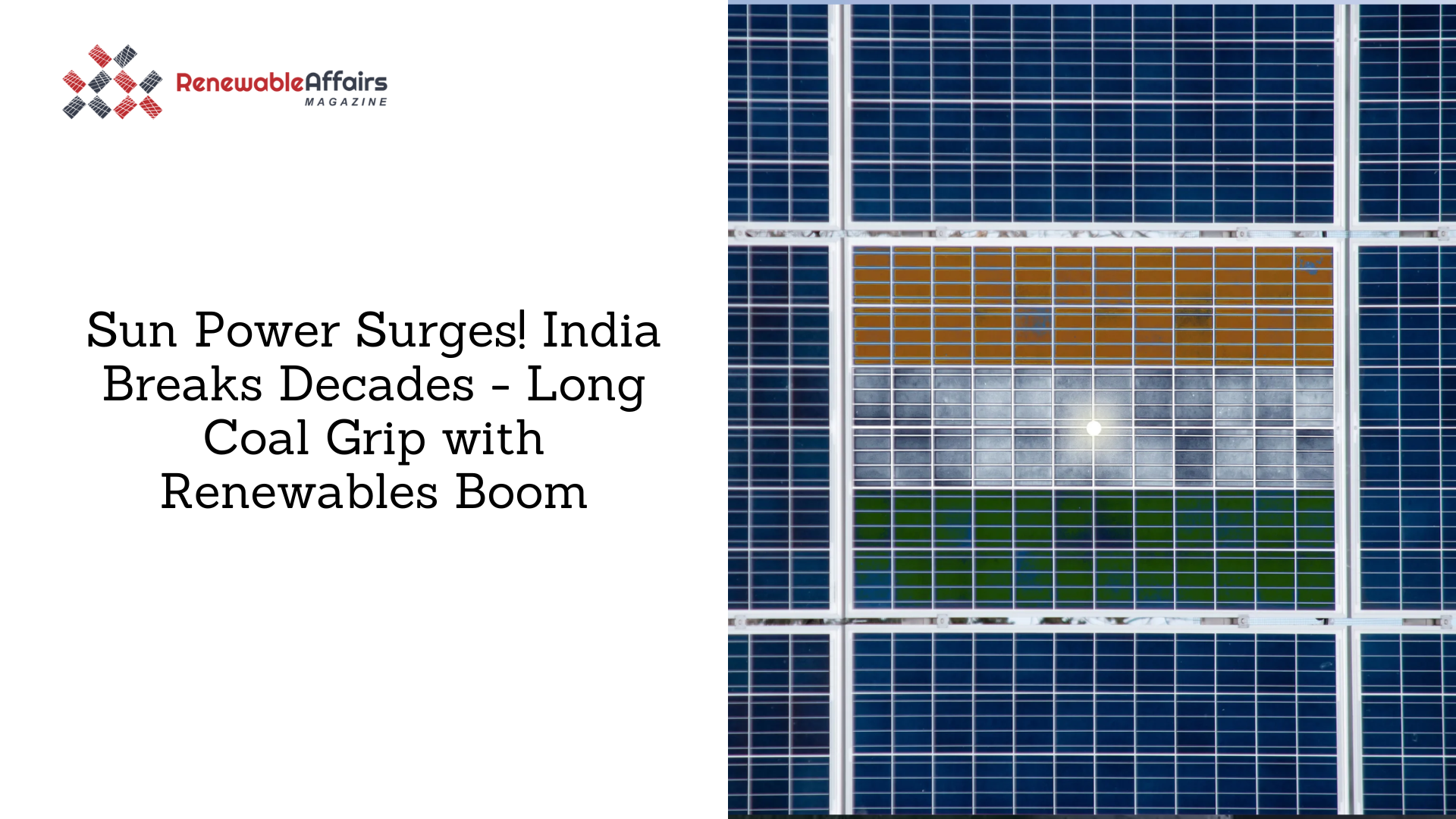
India has built clean power faster and cheaper than almost anyone. The International Energy Agency’s new India report says the next stretch will be decided by wires, batteries and the finances of state power distributors, not by solar panels.
The IEA released its India Renewable Energy Market Report 2026 on 3 November 2026 at the Bharat Renewable Energy Summit in New Delhi. It is a full report on India’s renewables market, with forecasts to 2030. Here are the five things worth knowing.
We’ve read the full report so you don’t have to and you can just have a glance on the charts so that it is easy for you. Every figure here comes straight from the IEA report or official sources, and we’ve turned the most important ones into easy-to-read charts. Where the IEA’s own figures tell the story best, we’ve included them as published, with full credit.
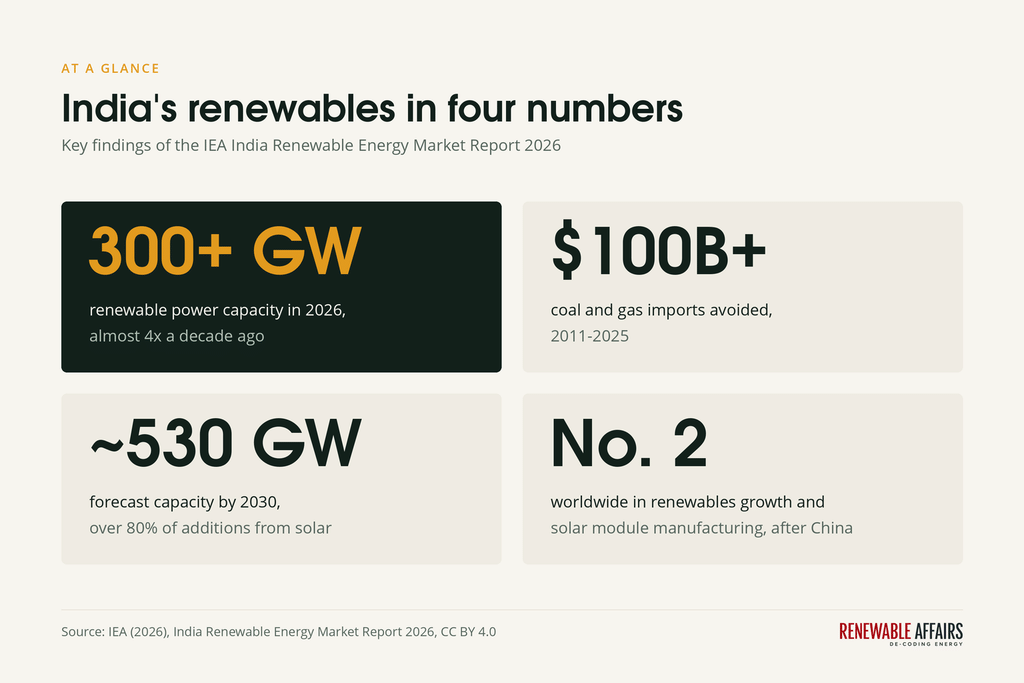
How India ranks globally, today and in 2030, according to the IEA:
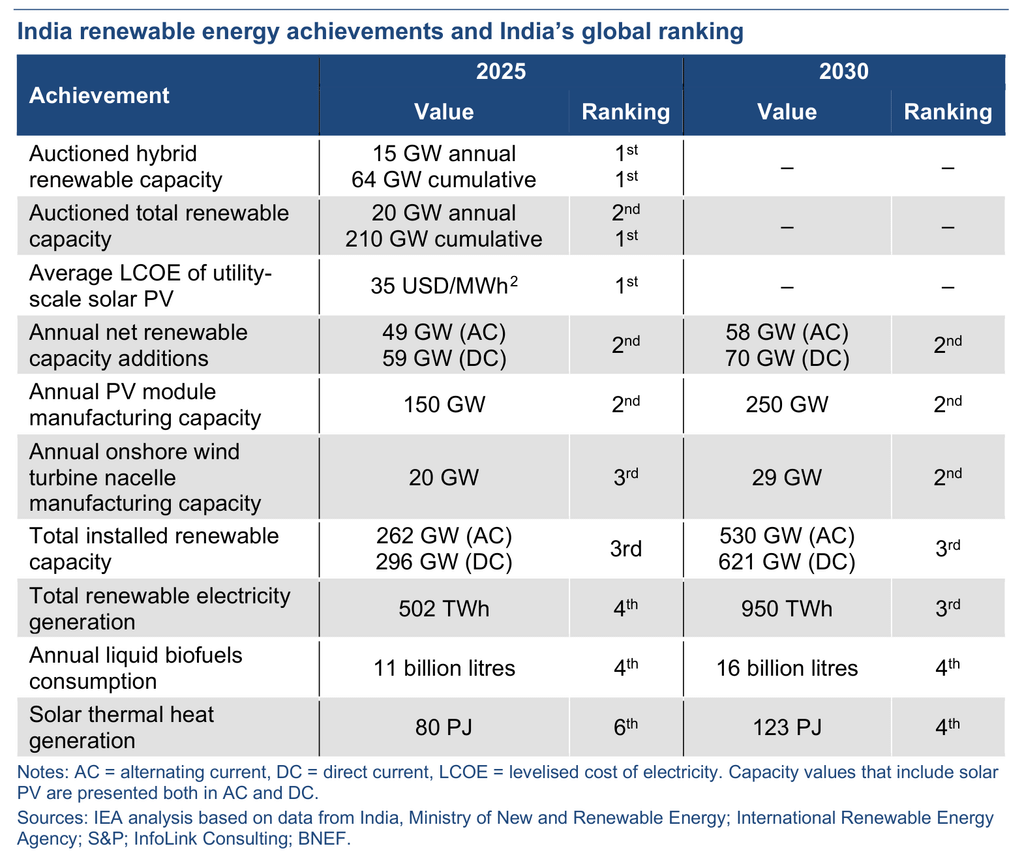
Source: IEA (2026), India Renewable Energy Market Report 2026, Licence: CC BY 4.0
1. Clean power is already saving India serious money
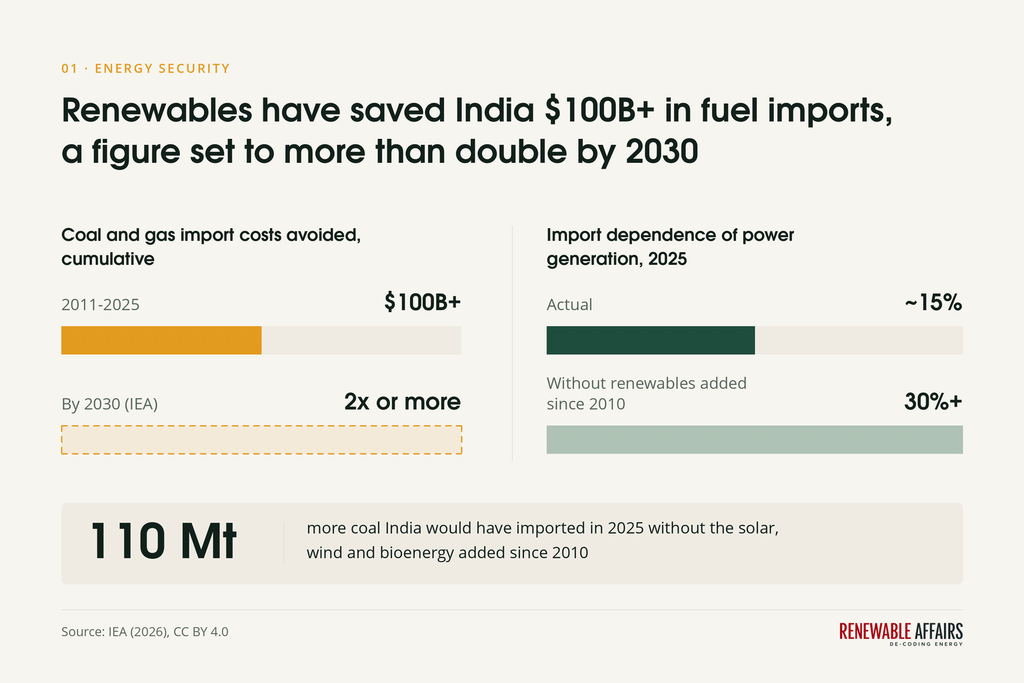
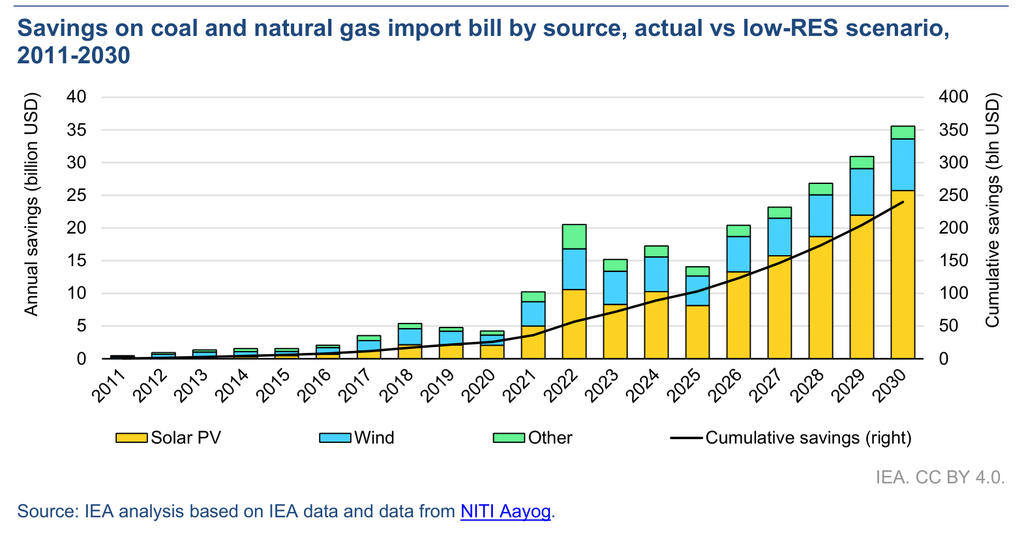
The report’s biggest finding is about money that never left the country. Renewable electricity helped India avoid more than $100 billion in coal and natural gas imports between 2011 and 2025. The IEA expects that saving to more than double by 2030.
Coal shows it most clearly. Without the solar, wind and bioenergy added since 2010, India would have imported about 110 million tonnes more coal in 2025.
Without that capacity, India’s power generation would have relied on imported fuel for more than 30% of its needs, about twice the actual level, the IEA estimates.
The IEA’s own chart shows how fast the savings are growing each year, with solar doing most of the work:

Source: IEA (2026), India Renewable Energy Market Report 2026, Licence: CC BY 4.0
Why this matters: imported coal and gas are paid for in dollars, at prices set by global markets. A solar plant has no fuel bill. Every gigawatt of it makes India less exposed to the next price shock.
India also reached 50% non-fossil installed capacity in 2025, five years ahead of its 2030 target. That counts power plants, not the electricity they produce. In actual generation, coal still dominates.
2. Auctions built the base; rooftops and factories are next
The IEA gives much of the credit to competitive auctions, where developers bid to supply power and the lowest price wins. They have given India some of the world’s cheapest solar power. India is also a global leader in hybrid projects, which pair solar with wind, and sometimes batteries, to supply power for more hours of the day.
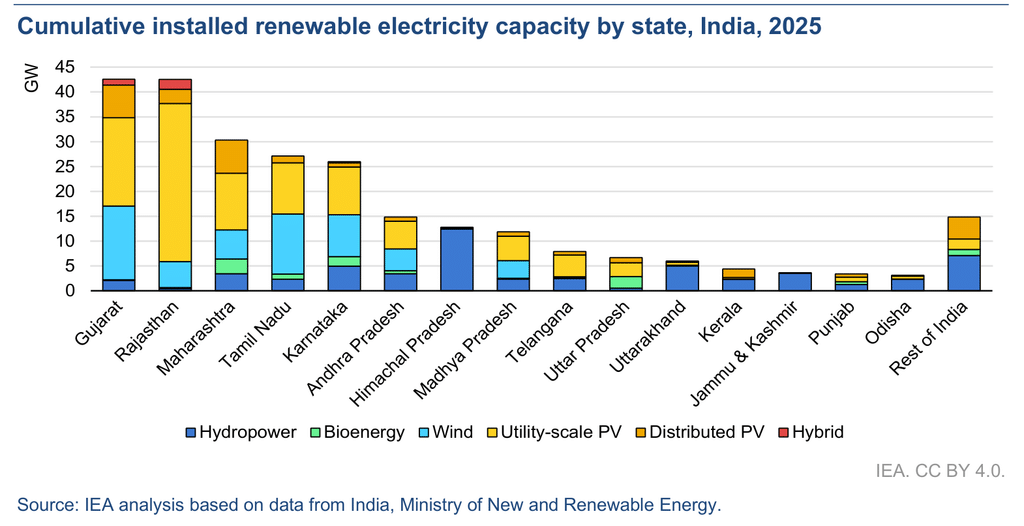
Growth is now spreading beyond giant solar parks:
- Rooftop and distributed solar are expected to grow faster than utility-scale plants. The utility-scale share of solar additions slips from about 75% to about 70% by 2030.
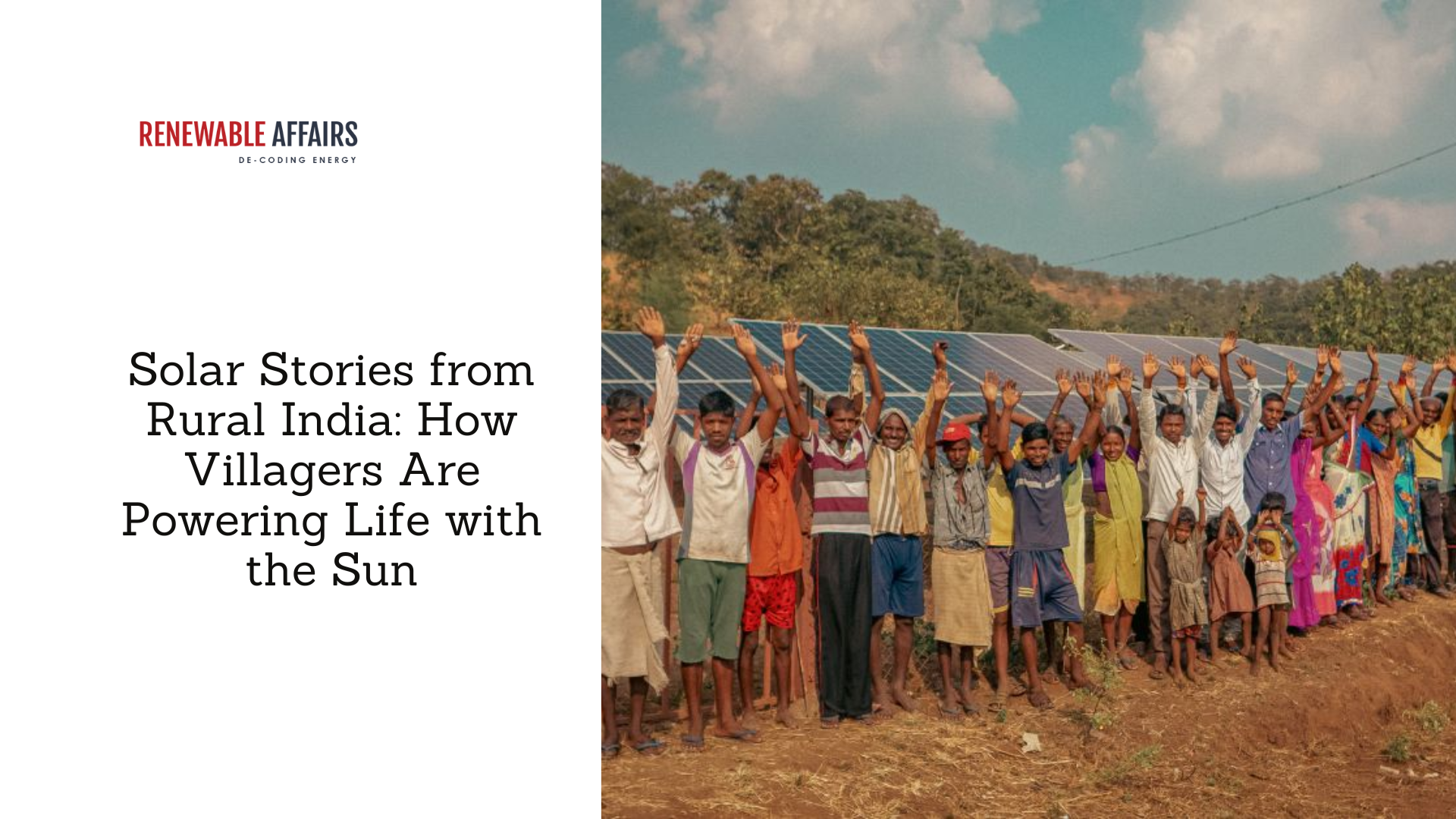
- Open access lets factories buy green power directly from developers. About 7 GW was contracted this way in 2025. It matters most in industrial states such as Gujarat, Maharashtra, Karnataka, Tamil Nadu and Rajasthan.
Source: IEA (2026), India Renewable Energy Market Report 2026, Licence: CC BY 4.0
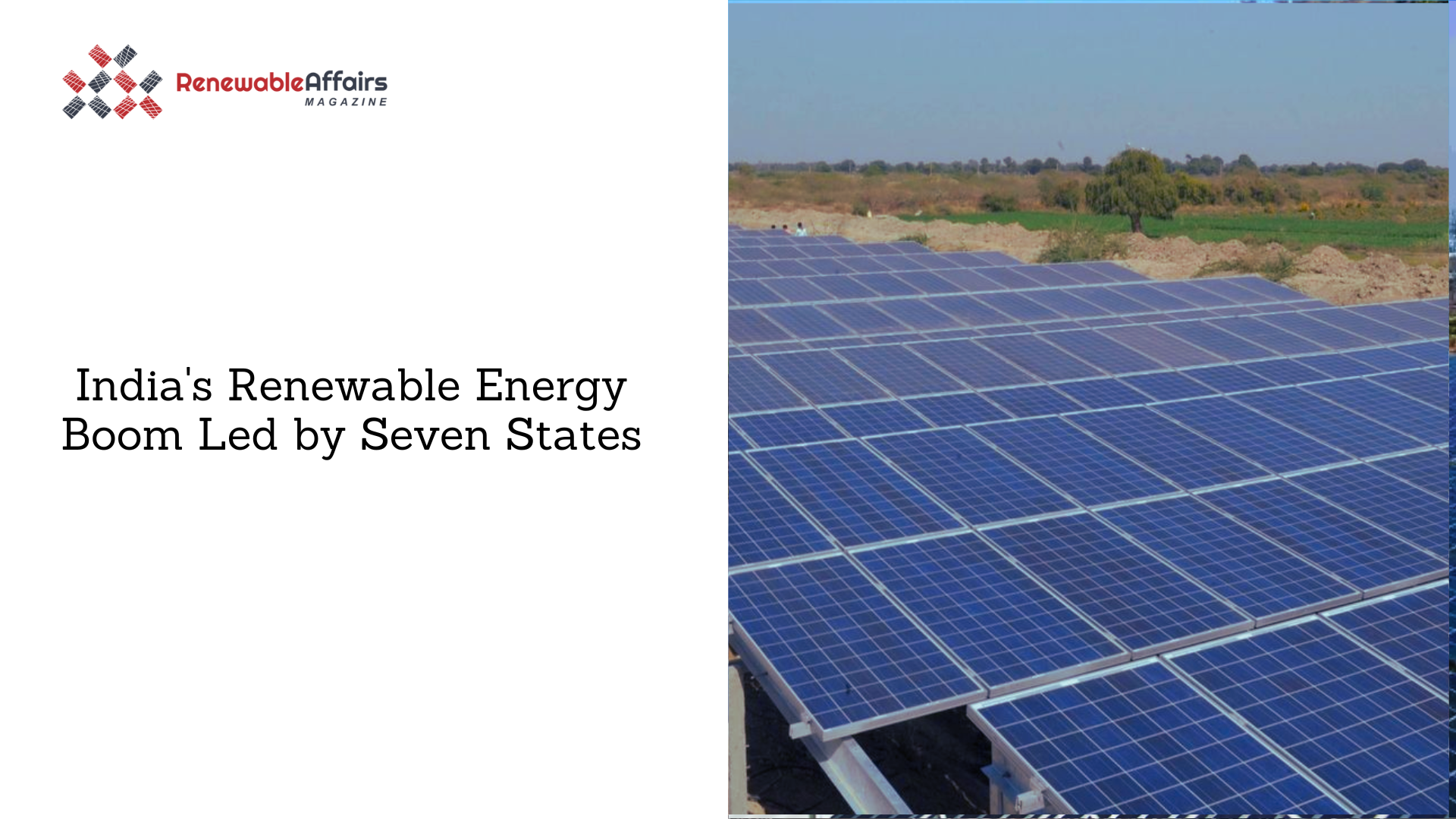
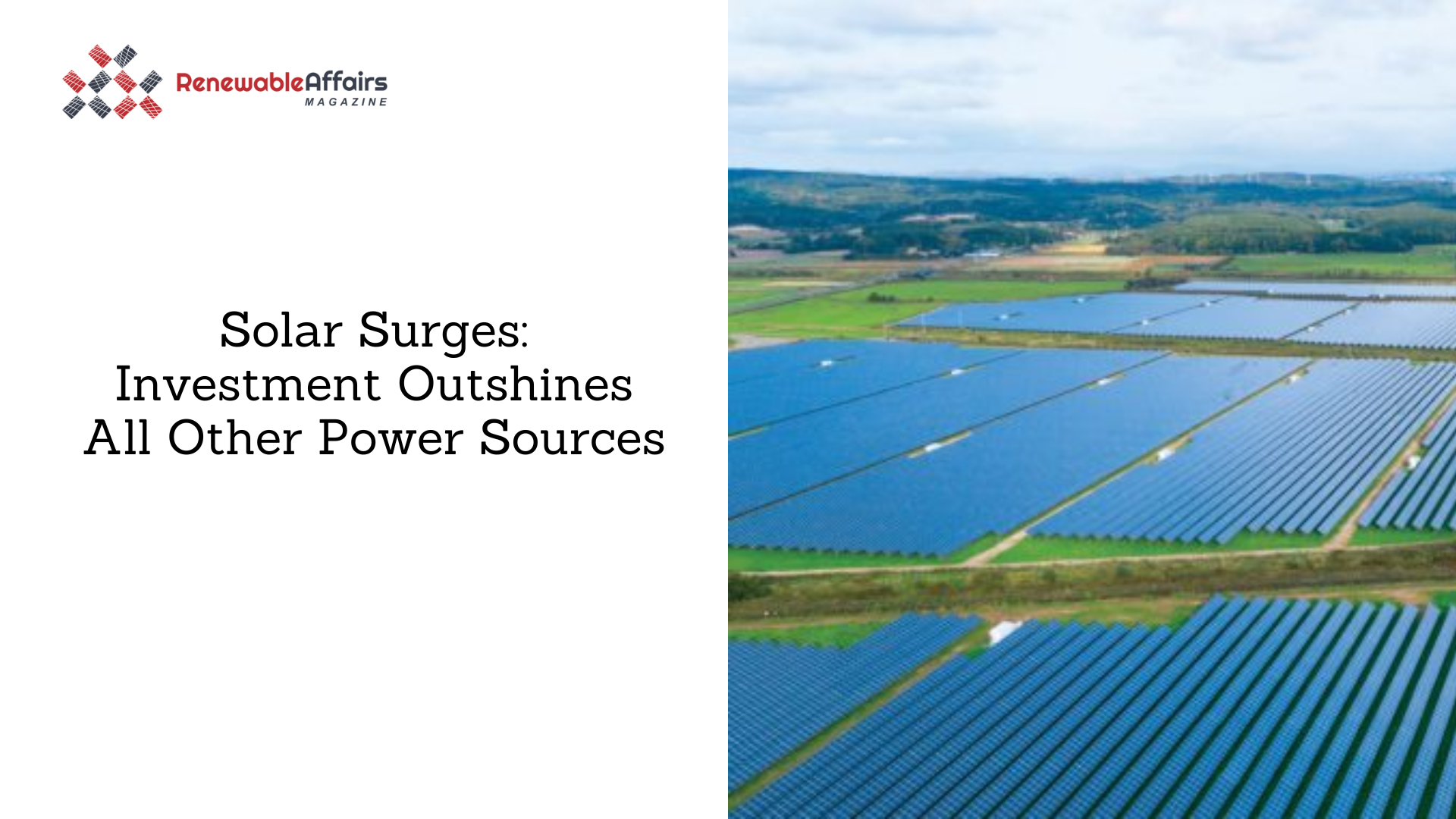
The IEA expects India’s solar capacity alone to exceed 350 GW (AC) by 2030.
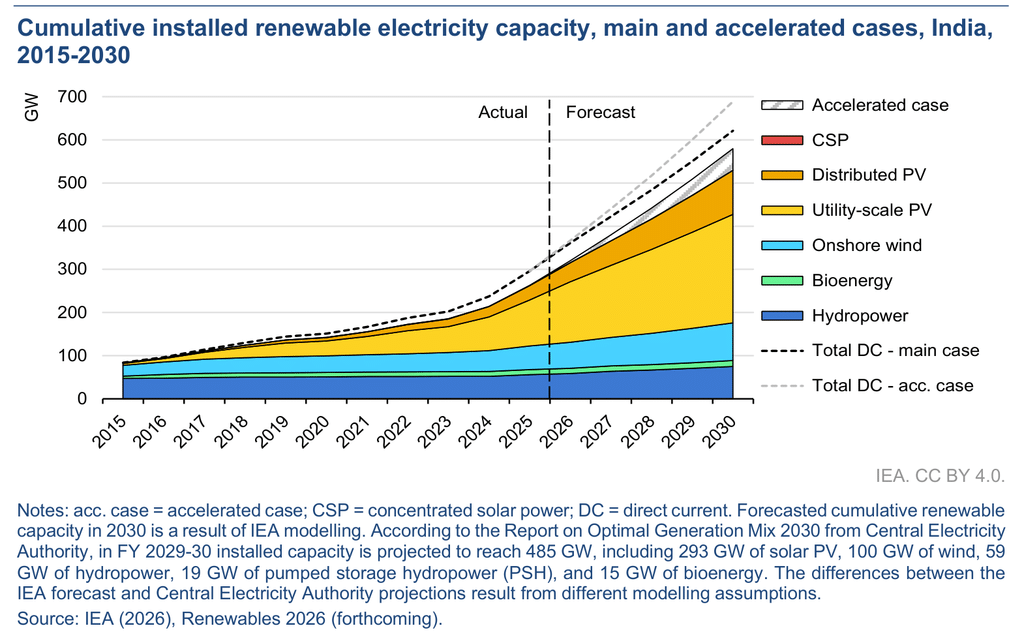
Source: IEA (2026), India Renewable Energy Market Report 2026, Licence: CC BY 4.0. The dashed lines show the main case and the faster “accelerated” case.
3. A solar-panel giant with a thin supply chain
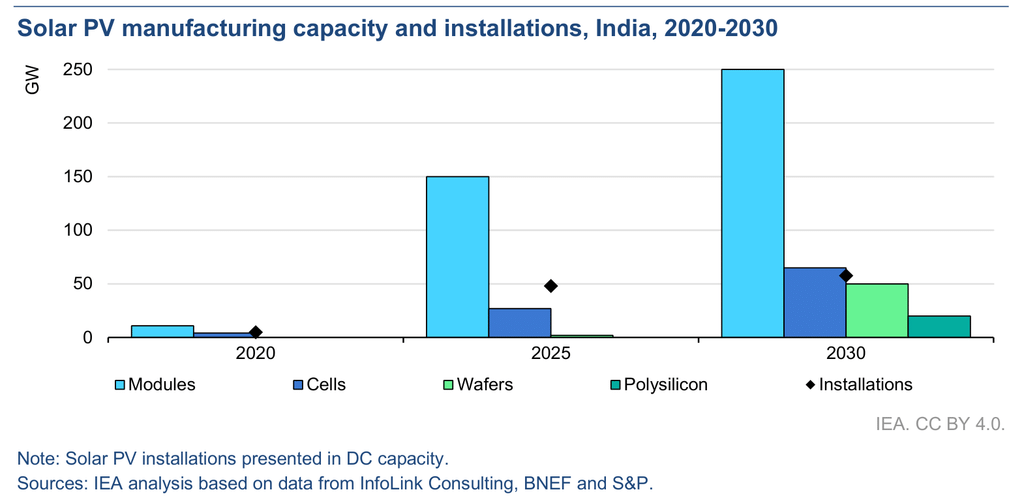
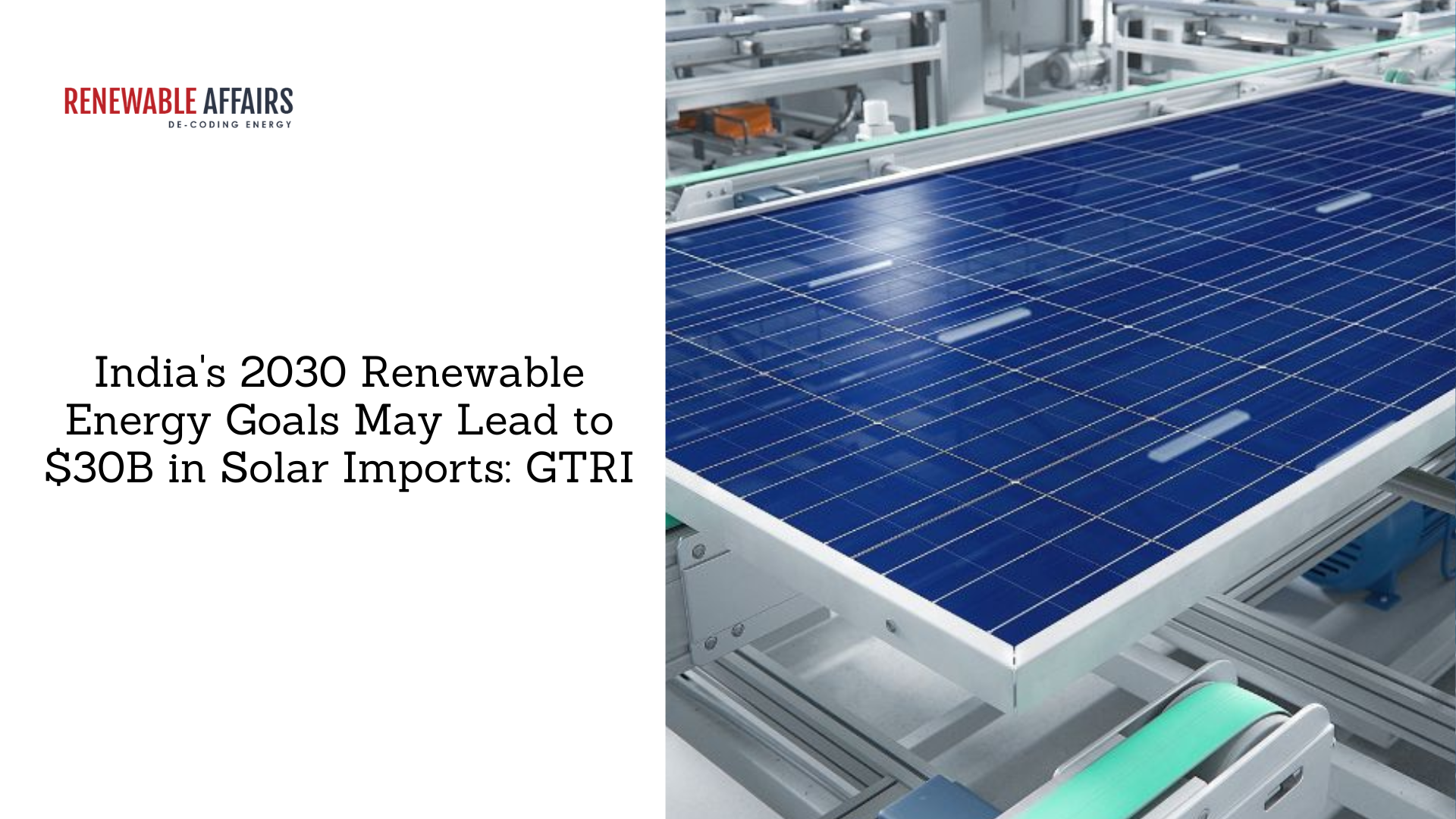
India is now the world’s second-largest solar module maker, behind China. Module capacity reached about 225 GW a year by September 2026, up from about 22 GW in 2022.
Source: IEA (2026), India Renewable Energy Market Report 2026, Licence: CC BY 4.0
A panel, though, is the last step of a long chain: polysilicon becomes wafers, wafers become cells, and cells are assembled into modules. India is strong at the final step and thin at the earlier ones.
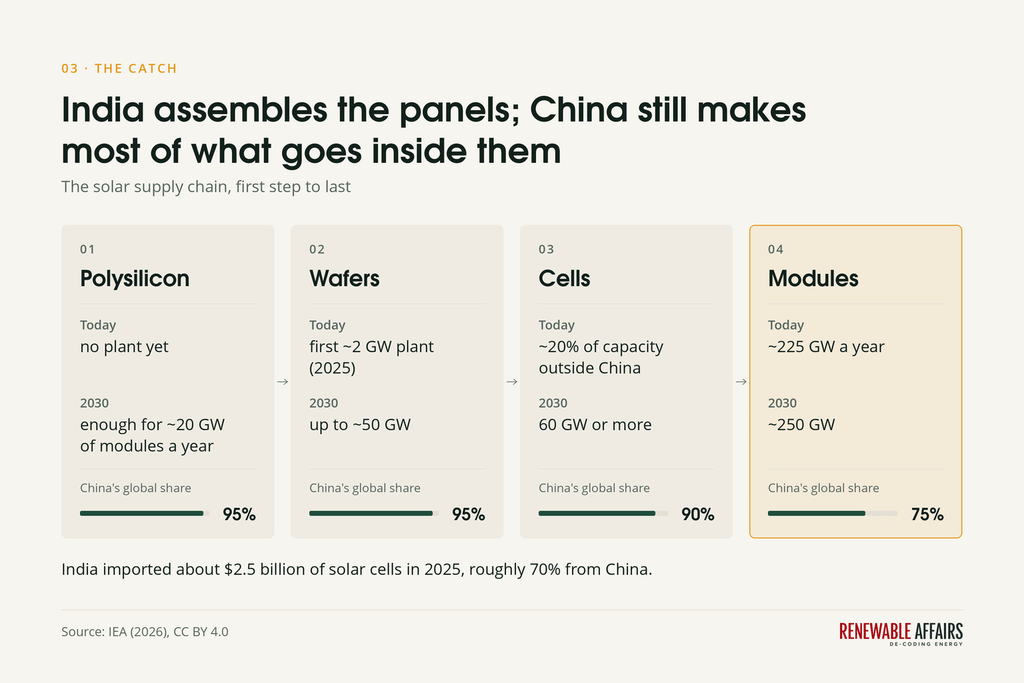
That gap shows up in trade data. India imported about $2.5 billion of solar cells in 2025, roughly 70% of them from China. A fully Indian-made module costs about $0.15 per watt: around 10% more than in China and cheaper than unsubsidised production in Europe or the US.
The IEA sees India as a possible second supplier for countries that want to buy less from China, with about 135 GW of spare module capacity for export by 2030. The catch is that the global market is already crowded.
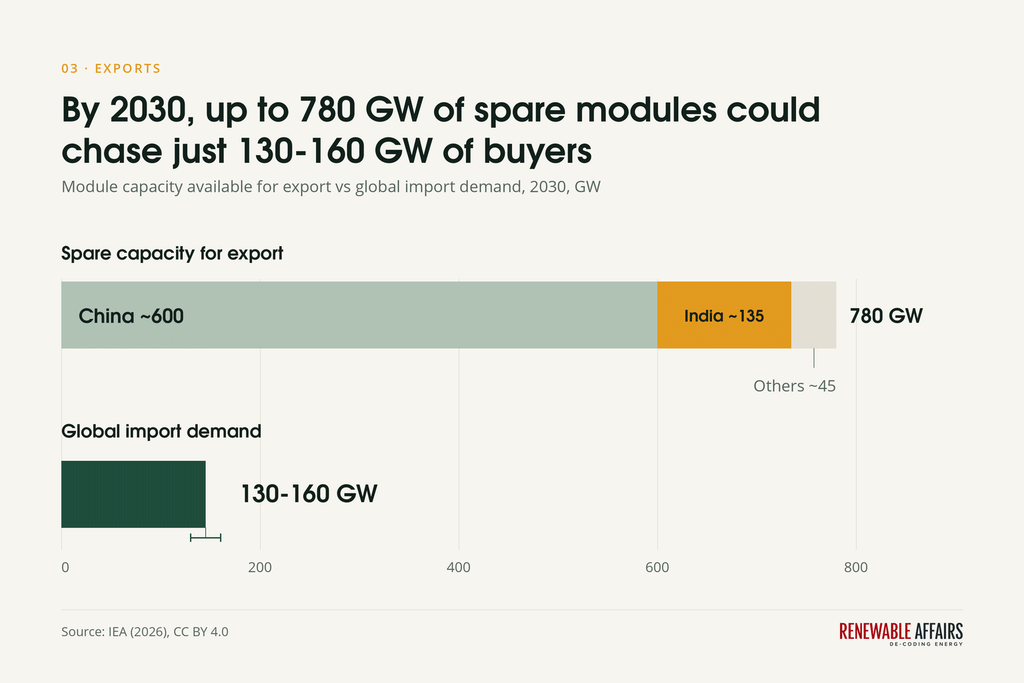
Indian makers will win export orders on cost, quality and trade rules, not on capacity alone.
4. The real bottleneck: wires and batteries
Solar peaks at noon, while India’s demand peaks in the evening. Closing that gap needs two things India is short of: transmission lines to carry power from sunny states to cities, and storage to move it into the evening.
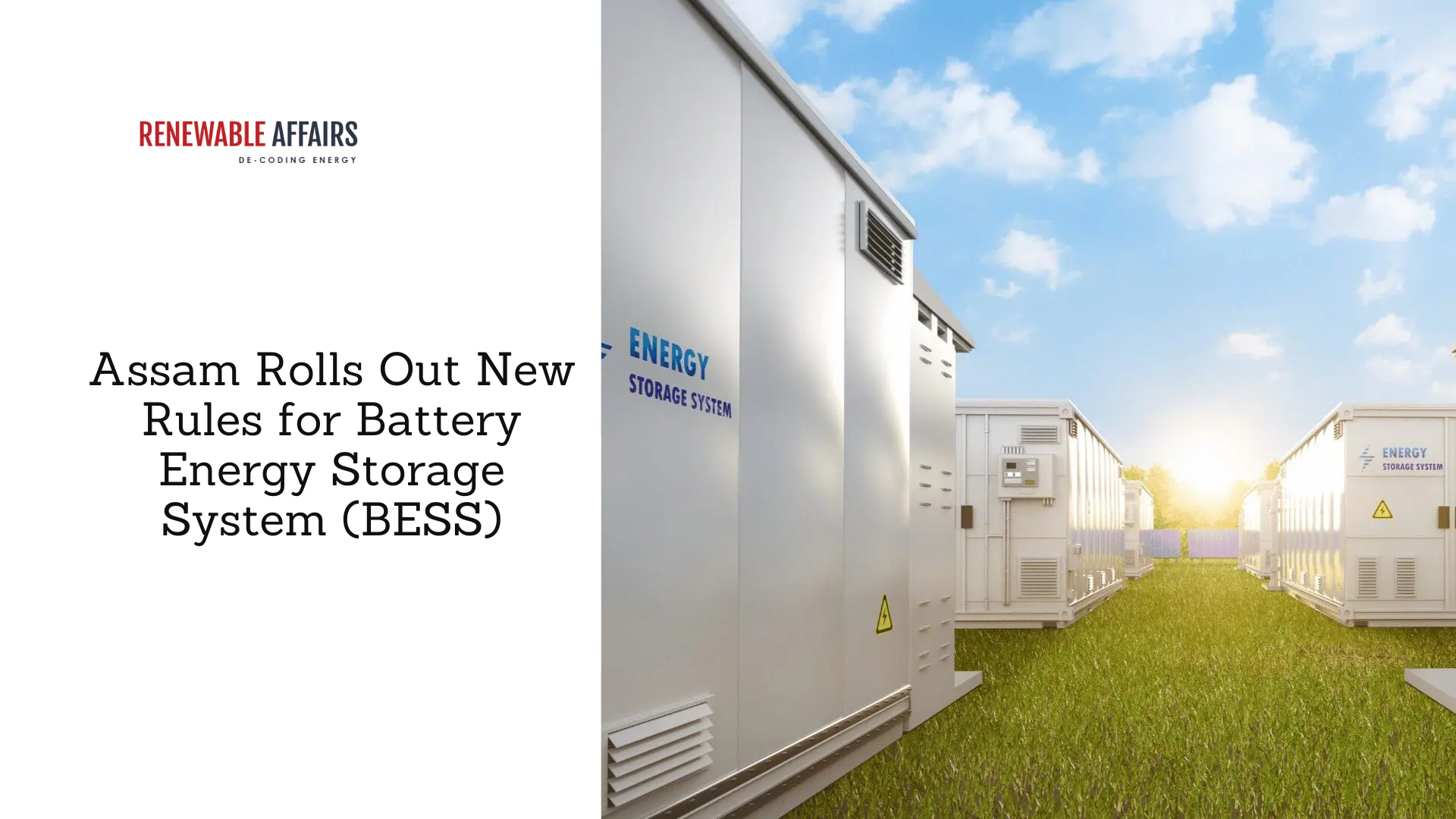
On batteries, India is starting from a very low base.
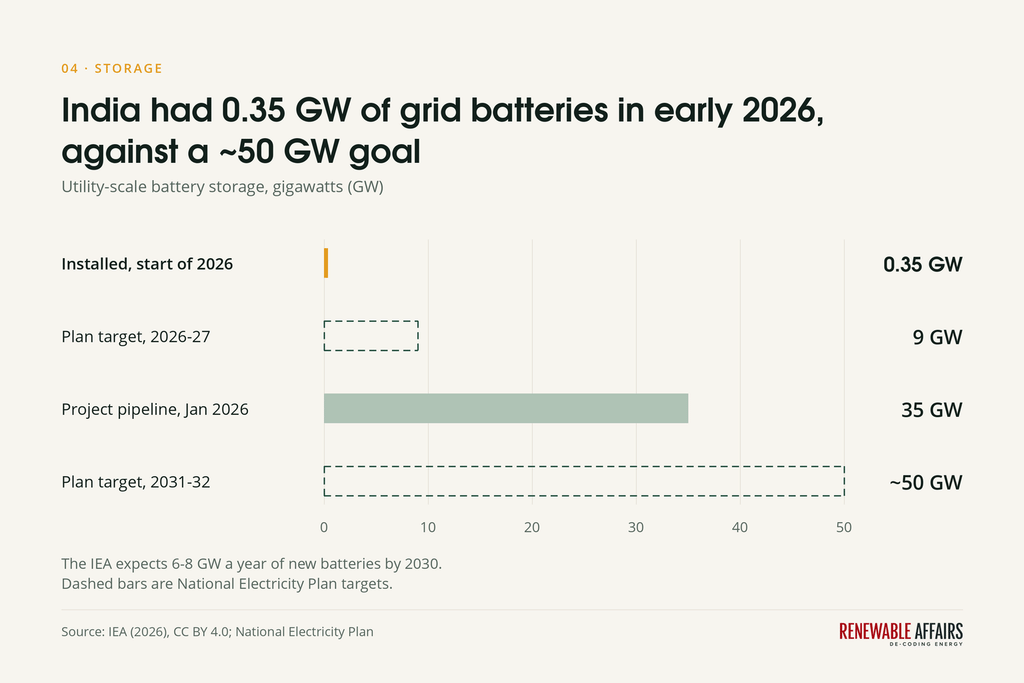
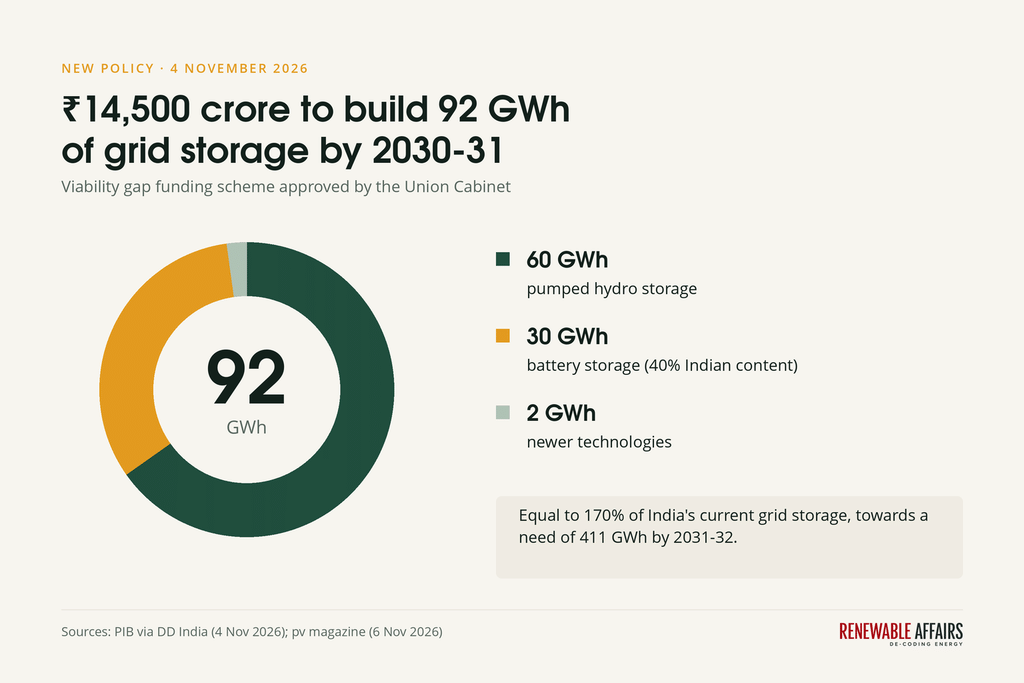
The pace is picking up. More than 1 GW of batteries is expected to come online in 2026, and the IEA sees 6–8 GW a year being installed by 2030. On 4 November, the Union Cabinet approved a ₹14,500 crore viability gap funding scheme for 92 GWh of new grid storage, split into 60 GWh of pumped hydro, 30 GWh of batteries and 2 GWh of newer technologies (DD India, pv magazine).
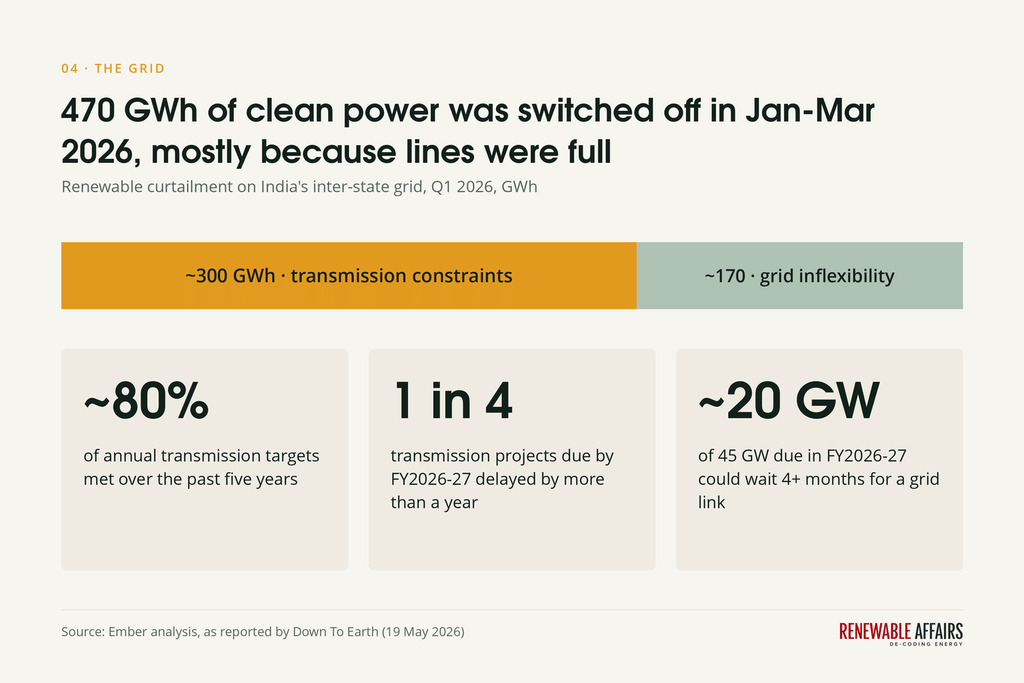
The grid is the other half of the problem. Think tank Ember found that about 470 GWh of renewable power was curtailed (switched off or wasted) on the inter-state grid in January–March 2026. Nearly two-thirds of that was because the lines were full (Down To Earth).
5. What could slow India down, and the 20% upside
The IEA names five things that will decide India’s pace: grid investment, storage, system flexibility, the finances of state distribution companies (discoms), and project delays.
Discoms buy power from generators and sell it to homes and businesses. When they are short of money, they hold off on signing long-term contracts, and developers hold off on building. Rating agency ICRA estimates that 40–45 GW of capacity already won in auctions had no signed power purchase agreement as of April 2026, and new awards have slowed sharply.
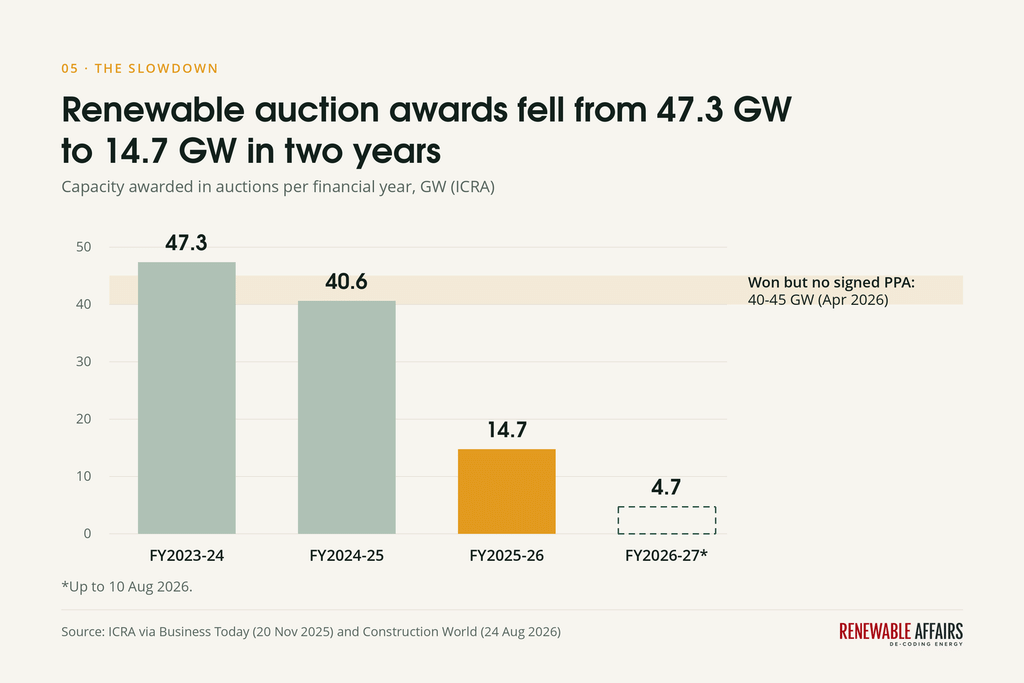
The IEA’s bottom line: fix these problems, and India could add renewable capacity more than 20% faster over 2026–2030 than in its main forecast.
What it means
India has shown it can build renewables cheaply and at scale. The next phase will be judged by how much of that power reaches homes and factories at the hours they need it.
- Households: rooftop solar is set to grow faster than big solar parks, so expect more installers, more financing options and, in time, home batteries.
- Businesses: open access is becoming a mainstream way to cut power bills and source green electricity.
- Investors and manufacturers: the openings are in cells, wafers, batteries and transmission, the parts of the system that are still missing.
Quick FAQ
How much renewable capacity does India have? More than 300 GW in 2026, according to the IEA.
What is the forecast for 2030? About 530 GW, with solar making up more than 80% of new additions.
What is curtailment? When a solar or wind plant is told to cut its output even though it could generate, usually because the grid can’t carry the power.
Sources
- IEA (2026), India Renewable Energy Market Report 2026, Licence: CC BY 4.0. Full PDF
- IEA, press release, 3 Nov 2026
- TaiyangNews, IEA: India Can Help Diversify Global Solar PV Supply Chains, 3 Nov 2026
- Saur Energy, Open Access, Rooftop Solar to Support India’s 350 GW Solar Target by 2030, 3 Nov 2026
- PSU Watch, India’s renewable energy capacity crosses 300 GW, 3 Nov 2026
- DD India, Cabinet approves ₹14,500 crore scheme for 92 GWh of storage, 4 Nov 2026
- Down To Earth, India loses 300 GWh of renewable energy in Q1 2026 (Ember analysis), 19 May 2026
- Construction World, Grid and storage readiness to drive next phase of RE growth (ICRA), 24 Aug 2026
- Business Today, New renewable energy capacity bids see sharp decline in FY26: ICRA, 20 Nov 2025
- Drishti IAS, VGF Scheme for Grid-Scale Energy Storage Systems (PIB summary: 170% of current storage, 411 GWh need by 2031-32), 6 Nov 2026
Charts and graphics: Renewable Affairs, built from the sources above. IEA data is used under the CC BY 4.0 licence.



































































































































































































































0 Comments